 Reckless Technology
Reckless Distortion
v0.21A distortion pedal: two clipping stages in series, a highpass ahead of them and a roll-off after them. Two tubes glow as hard as each stage works.

From the user guide
Using it
Tight sets how much low end reaches the stages, Gain how hard they are driven, Tone where the top rolls off, and Volume matches the result to your clean sound. Two stages give longer sustain and a more even attack than one pushed harder. The six curves are matched in loudness, so the Stage plates change the flavour, never the level.

Controls
| Close-up | Control | Range | Default | What it does |
|---|---|---|---|---|
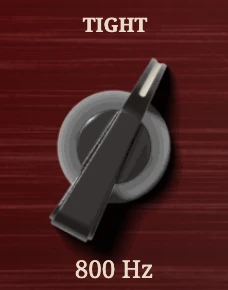 | Tight | 200 Hz to 2 kHz | 800 Hz | Highpass ahead of the stages: lower is fuller and looser, higher tighter. |
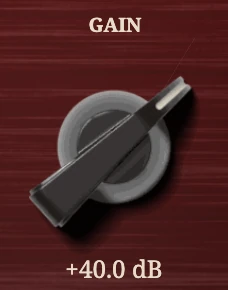 | Gain | 0 to +60 dB | +40 dB | Drive of both stages together; the second always runs at +20 dB. |
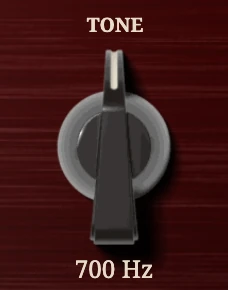 | Tone | 70 Hz to 7 kHz | 700 Hz | Where the roll-off starts: lower is darker, higher brighter. |
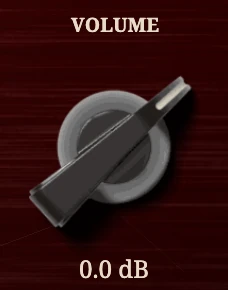 | Volume | -24 to +12 dB | 0 dB | Output level; unity sits two thirds of the way up. |
 | Stage 1 | Polynomial / Rational / Triode / Diode / Tanh / Hard | Polynomial | The first stage's curve. |
 | Stage 2 | as Stage 1 | Rational | The second stage's curve. |
The curves: Polynomial firm and lopsided; Rational the smoothest; Triode a tube stage; Diode clean to the knee, then sharp; Tanh smooth and the same on both halves; Hard the digital clip, the harshest.
Tips
- The defaults into a clean amp are a lead sound; back Gain off to +20 for a rock rhythm sound. The classic distortion is Triode into Diode.
- On a bass or a downtuned guitar, start with Tight low, around 200 to 300 Hz.
- Tone between 1 and 2 kHz brightens a lead without turning it to fizz.
- Watch the tubes: the sound changes most when the first stage bends and the second squares.

It adds a few samples of latency (five at 44.1 and 48 kHz), which your host compensates for.