 Reckless Technology
Reckless Drive
v0.21An overdrive pedal: a highpass, a clipper and a roll-off from 700 Hz, with a tone control that moves the roll-off. The lamp shows how hard you are driving it.

From the user guide
Using it
Tight decides how much low end reaches the clipper, Gain how hard it clips, and the Clip plate the curve. Tone moves the roll-off; Volume matches the driven sound to your clean one. The six curves are matched in loudness, so the plate changes the flavour, never the level.

Controls
| Close-up | Control | Range | Default | What it does |
|---|---|---|---|---|
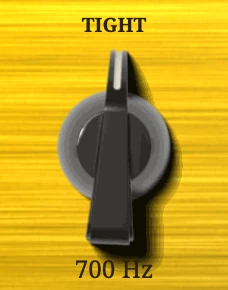 | Tight | 150 Hz to 3 kHz | 700 Hz | Highpass ahead of the clipper: lower is fuller and looser, higher tighter. |
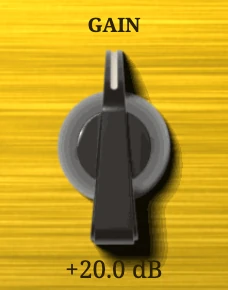 | Gain | 0 to +40 dB | +20 dB | How hard the clipper is driven; the default is a light crunch. |
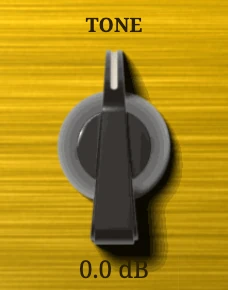 | Tone | -12 to +12 dB | 0 dB | Up moves the roll-off toward 2.8 kHz, brighter; down is darker. |
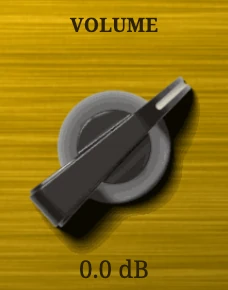 | Volume | -24 to +12 dB | 0 dB | Output level; unity sits two thirds of the way up. |
 | Clip | Polynomial / Rational / Triode / Diode / Tanh / Hard | Rational | The clipper's curve. |
The curves: Polynomial firm and lopsided; Rational the smoothest and most compressed; Triode the gentlest at moderate gain; Diode the overdrive pedal's edge; Tanh smooth, the same on both halves; Hard the digital clip, the harshest.
Tips
- The classic overdrive is the defaults with Diode on the plate.
- A boost into a driven amp: Gain 0 to +10 dB, Volume up, Tone up a little, Tight at 1 kHz or above.
- Fat lead: Gain +30 or more, Tone at -3 to -6 dB, Rational or Triode for sustain.
- Read the lamp: set Gain so a hard strum just fills it and the dynamics stay under your hand.

It adds four samples of latency at every rate, which your host compensates for.